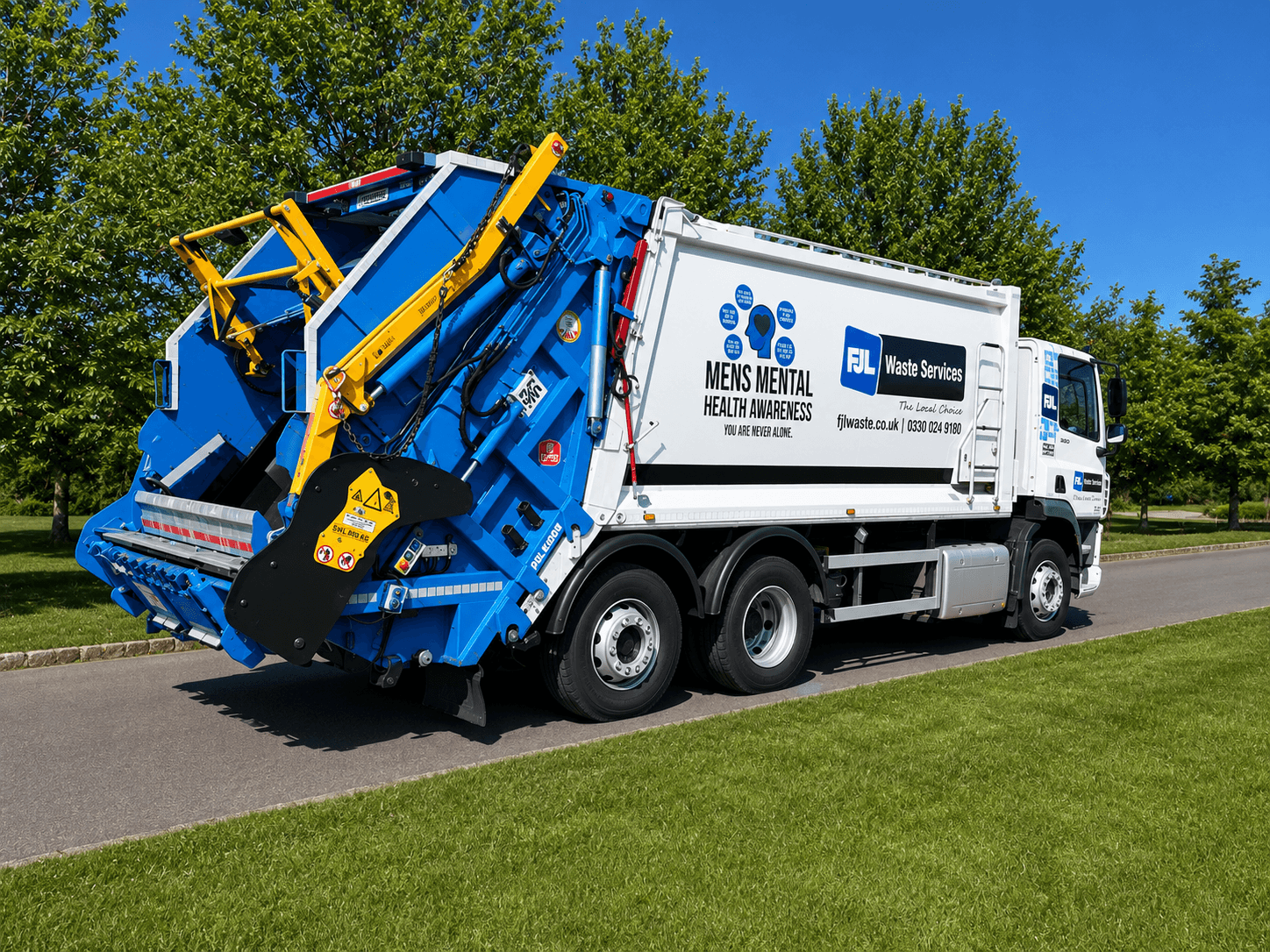
Mens Mental Health
You are never alone.
Awareness livery on the side of every collection round in the boroughs we serve. Quiet, important, on the side of a bin lorry.
Food waste collection
FJL Waste Services runs commercial food waste collection across London, with our densest rounds in west and south west London, and out into Surrey and the Thames Valley. We collect from kitchens, restaurants, canteens, care homes and schools in sealed containers, on a frequency that matches what you actually produce, with the compliance paperwork kept on file.
Under Simpler Recycling, workplaces in England with 10 or more full time equivalent employees have had to separate food waste since 31 March 2025. Smaller businesses follow on 31 March 2027.
63% of the food waste collections FJL runs today started on or after that date, and new food waste services went from 27 started in 2024 to 91 in 2025. Source: Commercial Waste Report 2026.
Who we collect from
Different premises produce very different volumes on very different patterns. We size and schedule around yours rather than dropping a standard package on site.
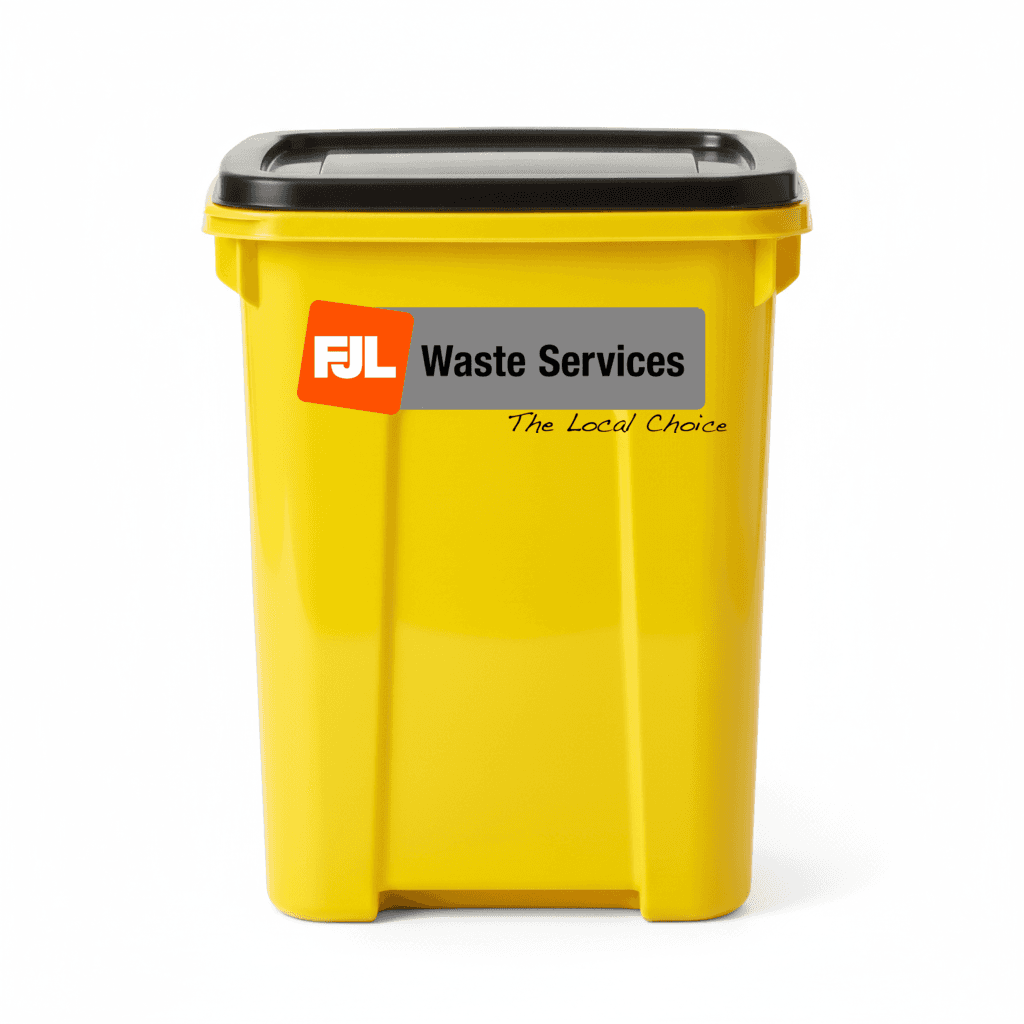
Back-of-house caddies emptied into a sealed external bin, on a frequency that keeps up with covers rather than the contract you signed three years ago.
Kitchen and dining hall waste on term-time patterns, with the documentation a compliance officer or governor will ask to see.
Reliable scheduled collections where a missed lift is a hygiene problem, not an inconvenience.
Staff kitchens and canteen prep waste separated properly, so the general waste bin shrinks and the bill usually follows.
Event and banqueting peaks absorbed without the bin store overflowing between collections.
Higher-volume production waste, sized on tonnage rather than guesswork, with diversion figures you can report.
Where it goes
Collected food waste goes to a local anaerobic digestion facility, where it is processed into biogas for renewable energy and a digestate used as fertiliser.
That matters for two reasons. It is the route the Simpler Recycling rules are designed to push waste down, and it is the reason you can report a genuine diversion figure rather than an intention.
It also solves a problem you might not have connected to waste at all. Food is what draws rats, flies and gulls to a commercial bin store. Take it out of the general waste bin and put it in a sealed container on a short cycle, and the attraction goes with it. We wrote about that in more detail in when a waste problem becomes a pest problem.
Food waste sits inside the wider separation rules. If you want the full picture of what your business has to separate and when, see Simpler Recycling explained.
Coverage
Putney to Maidenhead, Heathrow to Wimbledon. Pick your town for local collection days and a price. Food waste sits alongside the rest of our commercial waste collection across London.
Why our lorries look like that
Mental health awareness, autism support, a Lightning McQueen tribute that makes kids point on the school run. Our fleet earns its keep and then some.
Mens Mental Health
Awareness livery on the side of every collection round in the boroughs we serve. Quiet, important, on the side of a bin lorry.
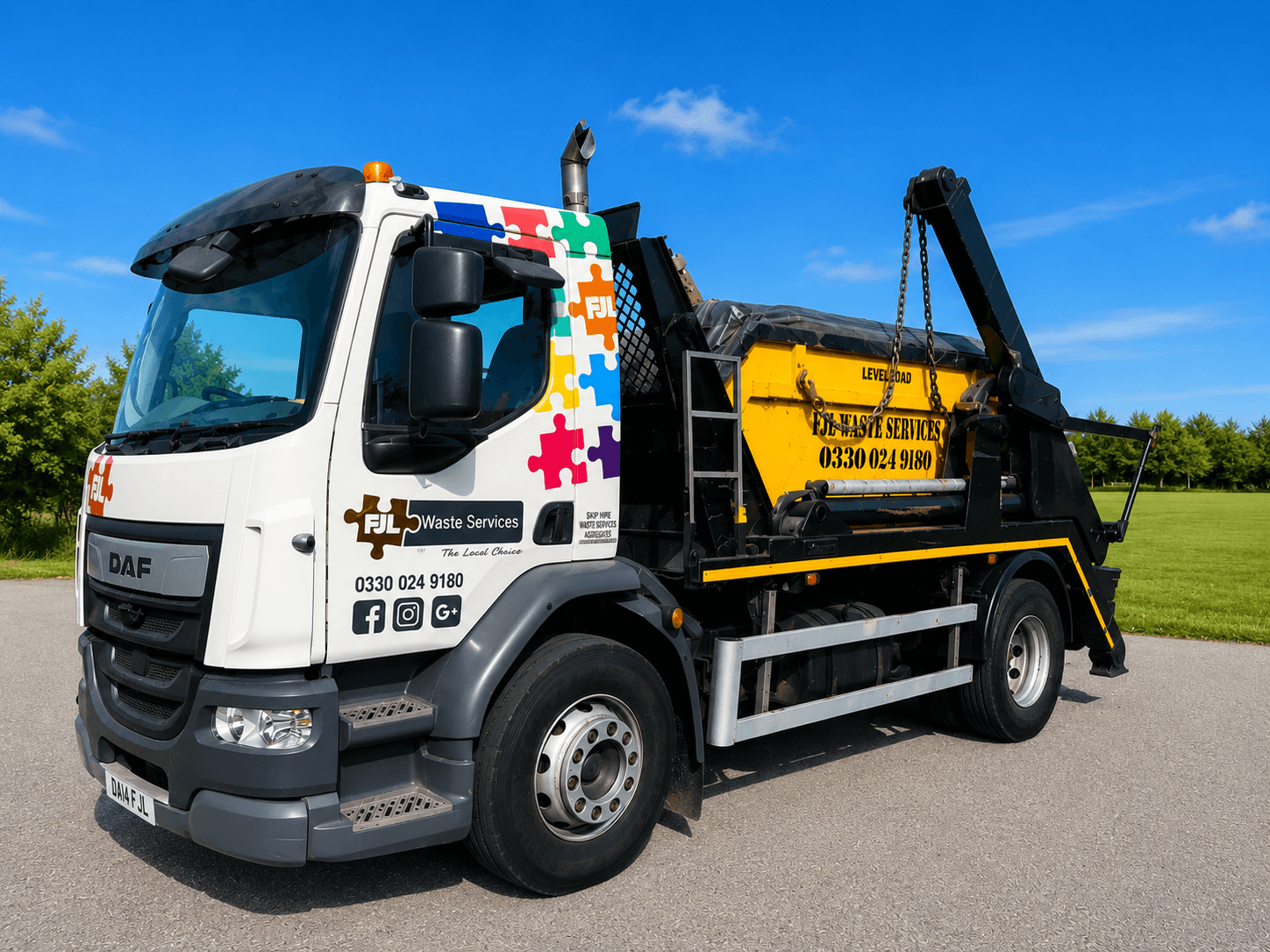
Autism Awareness
Designed with families in mind. Lifts the spirits on collection day and raises money for local charities.
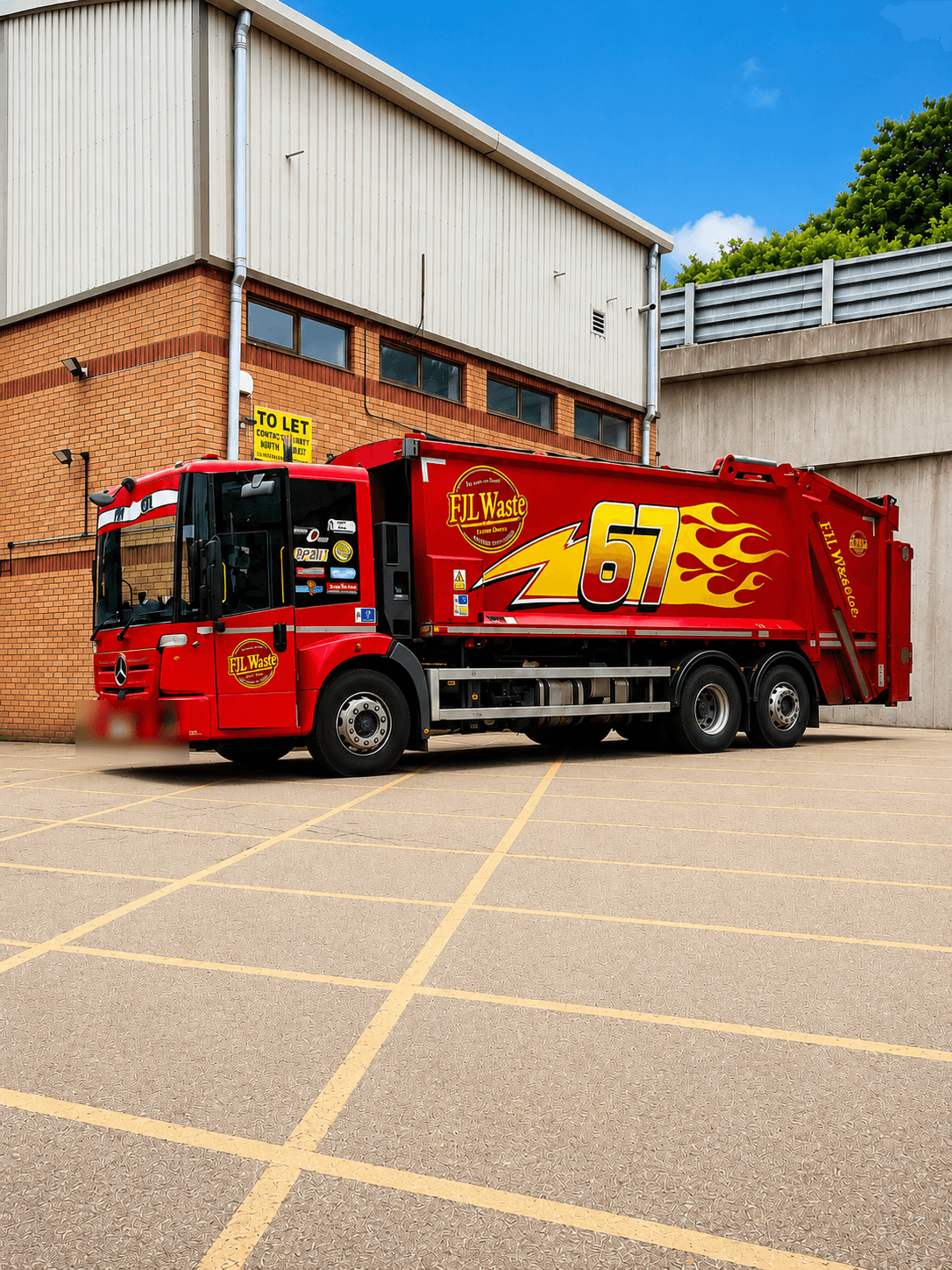
Cars Theme
Lightning McQueen on a Mercedes. A community favourite, especially on the school run.
FAQ
Yes. FJL Waste Services collects commercial food waste across London from its depot in Uxbridge, with the densest rounds in west and south west London, and on into Surrey and the Thames Valley. Pick your town below for local collection days, or call us with your postcode.
For most businesses in England, yes. Since 31 March 2025, workplaces with 10 or more full time equivalent employees have had to separate food waste from general waste under the Simpler Recycling rules. Businesses below that threshold come into scope on 31 March 2027. There are limited exemptions, so check your own position, but for kitchens, restaurants, canteens and care settings the answer is almost always yes.
Anything from daily to weekly. Food waste is the wettest and most attractive material in a bin store, so getting the frequency right matters more here than on any other stream. Busy kitchens usually run several collections a week, lighter offices weekly.
Sealed kitchen caddies for back of house, larger lidded external bins for the bin store, and liners if you want them. We look at what you actually produce and size it accordingly, rather than dropping a standard package on site.
Usually less overall. Food waste is heavy and wet, and pulling it out of general waste shrinks your most expensive container. A lot of sites end up moving to a smaller general waste bin or a lower frequency after the switch, which offsets the cost of the food stream.
It goes to anaerobic digestion, where it is processed into biogas for renewable energy and a digestate used as fertiliser. That is what keeps it out of landfill and what gives you a diversion figure to report.
It is the single biggest improvement most commercial bin stores can make. In a general waste bin, food sits until the next general collection. In a sealed caddy on a short cycle it is contained and gone, which removes the thing that attracts rats, flies and gulls in the first place.
Yes. Waste transfer documentation is kept on file and produced on request. Environmental health officers and client auditors ask for it, and the usual failure is not that it does not exist but that nobody on site can find it.
Tell us your postcode and what you throw away. You will have a clear price back today, not next quarter.