Blog · Bin stores & hygiene
When a Waste Problem Becomes a Pest Problem

Frazer Lanagan, Managing Director · · 8 min read
The short version
- Pest activity at commercial premises is usually a waste symptom first. Bins that cannot close, bags left on the ground, and a collection frequency that no longer matches output are the three we see most.
- Changing container size or collection day removes the food supply. It does not remove animals that have already nested, and it will not close the gaps they are getting in through.
- Separate food waste is the single biggest lever. It takes the wettest, most attractive material out of general waste and puts it in a sealed container on a shorter cycle.
- If you already have activity, run both jobs at once. Fixing the waste without treatment, or treatment without fixing the waste, is why these problems come back.
Our drivers are in and out of a few hundred commercial bin stores a week, from restaurant yards in Twickenham to industrial units around Slough and Heathrow. After a while you recognise the pattern. Long before anyone reports a rat, the bin store is usually already telling you it is coming.
This is written from the collection side rather than the treatment side. We are a waste company, not a pest control company, so the useful thing we can offer is what a round actually looks like when a site is heading for trouble, and which of those things a change to your waste setup will genuinely fix.
What a crew notices before anyone reports a pest
Three things stand out on a round, and none of them need any expertise to spot yourself.
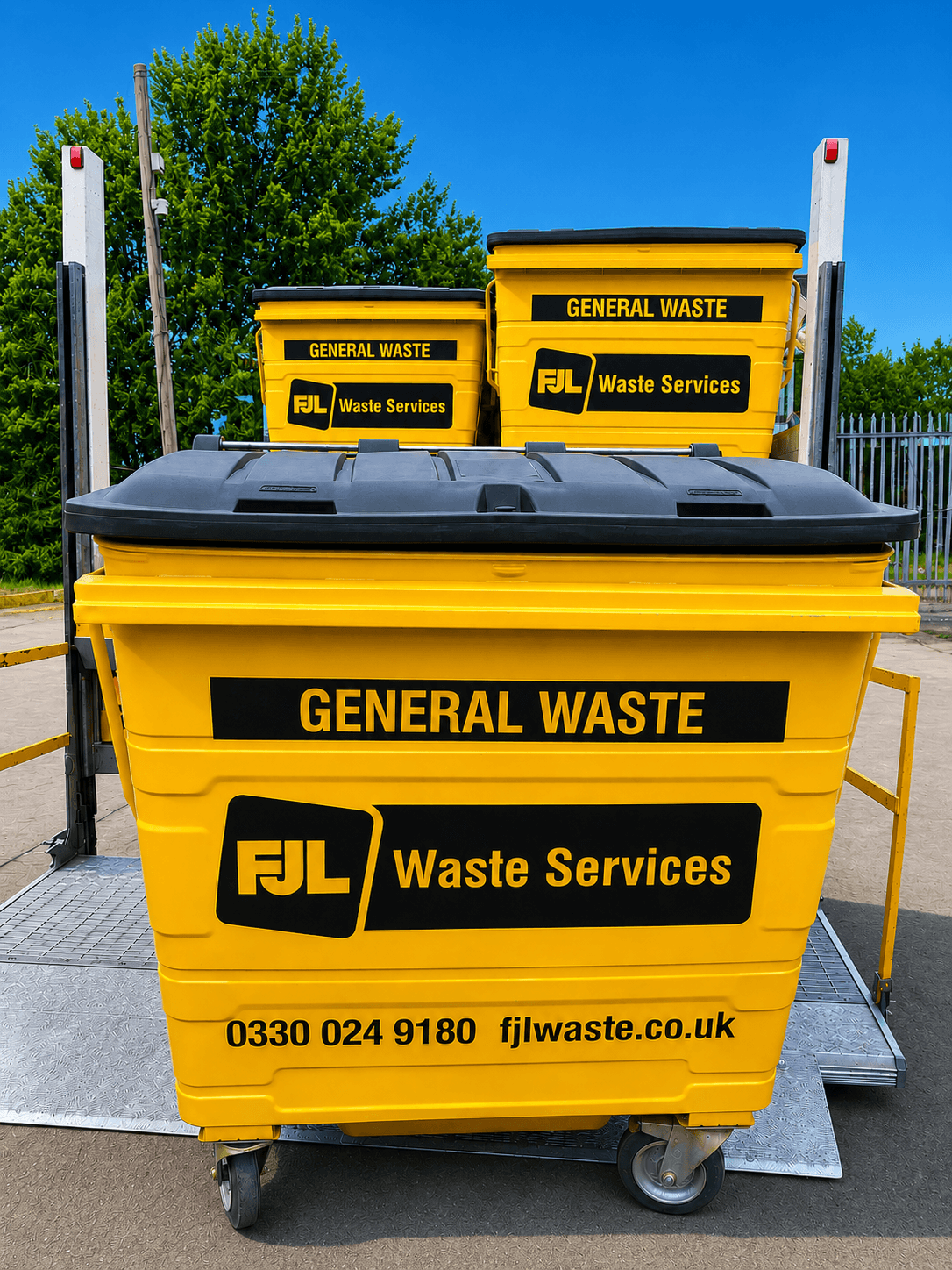
- Lids that have not closed in weeks. A bin propped open by its own contents is an open food source with a roof on it.
- Bags on the floor beside the bin. A bag is not a container. It is a meal in a thin plastic wrapper, and it will be opened overnight.
- Standing liquid under the bins. Spilled food waste and rainwater pooling in a low corner of the store gives flies somewhere to breed and everything else somewhere to drink.
The fourth is harder to see from the cab, but you will know if it applies to you: nobody owns the bin store. Shared yards behind parades of shops, and multi-tenant industrial estates, are where this goes worst, because every business assumes the mess belongs to someone else.
The bin store conditions that turn into callouts
The volume outgrew the container
Most sites we take over have the setup they agreed to when they signed up, not the one their current output needs. A kitchen that has added covers, an office that has taken another floor, a warehouse that has changed what it ships. The bins stayed the same size on the same day, and now they overflow for three days out of seven. That overflow is the food supply.
The wrong container for the material
Loose food waste in a general waste bin is the worst combination on a commercial site. It is wet, it smells, it leaks, and the general waste bin is usually the least frequently emptied thing in the store. A sealed food caddy on a shorter cycle removes the attraction instead of managing it.
The store itself is never cleaned
Bins get emptied. Bin stores mostly do not. Residue on the floor and down the walls carries on feeding flies after the bins have gone, which is why some sites stay busy with insects even when the containers themselves look fine.
Nothing is proofed
Gaps under doors, broken airbricks, missing drain covers, a gate that does not meet the ground. This one is not a waste problem at all, and no change we make to your collection will touch it. Worth being honest about rather than letting you think a new bin will solve it.
What changing your waste setup actually fixes
Being straight about the limits is more useful than overselling it. Here is the honest split.
- It removes the food supply. Right-sized containers that close, on a frequency that matches real output, stop the overnight buffet.
- It removes the breeding material. Separate, sealed food waste on a short cycle takes the wettest fraction out of the mix entirely.
- It reduces the residue. Fewer overflows means less mess on the floor, and that mess is what keeps flies going between collections.
What it does not do: it will not remove rats that have already established a harbourage under decking, in a cavity or in the drains, it will not close the gaps they are using to get in, and it will not deal with an infestation that has already moved indoors. Those need treatment and proofing, which is a different trade to ours.
Where waste management stops and pest control starts
The rule of thumb we use is simple. If you are seeing droppings, gnawing, runs, or flies indoors, the waste fix on its own is not going to be enough. Do it anyway, because otherwise the problem returns, but get a pest contractor in at the same time.
For commercial sites in London we point customers at JG Pest Control's London commercial team. They cover every London borough and are open 24 hours a day, with technicians attending every day except Christmas Day, including nights, weekends and bank holidays, so overnight and out-of-hours visits are workable on a live site. Their technicians are RSPH (BPCA) Level 2 certified, and they produce audit-ready documentation of the sort EHO and Food Standards Agency inspections ask for. They are rated 4.8 out of 5 from more than 26,000 Trustpilot reviews, which you can check yourself rather than take our word for.
Being straight about the connection
JG Pest Control is a separate company. FJL is not part of their group and they are not part of ours. The connection is James Gale, director of JG Pest Control (JG Environmental Ltd), who also works with FJL's managing director on marketing and strategy. We would rather state that plainly than present this as an arm's length pick. Every claim above is on JG's own site and their public Trustpilot profile, so it is checkable.
A sensible order of work
- 1Get the food out of general waste. Separate food waste collection is a legal requirement for most businesses in England anyway, and it is the fastest single improvement to a bin store. See Simpler Recycling explained.
- 2Right-size the containers. You want bins that close with the lid down on collection morning, not bins you have to sit on. See commercial bin sizes explained.
- 3Match the frequency to reality, not to the contract you signed three years ago.
- 4Clean the store, not just the bins, and keep the floor clear so bags never sit on the ground.
- 5Proof the store. If there is already activity, get treatment running in parallel rather than afterwards.
If the first three of those need changing, that part is our job, and for most sites it is a same-week change rather than a project. Tell us what you produce and where and we will size it properly. Get a quote or call 0330 024 9180.
Frequently asked questions
Will more frequent collections stop rats on their own?
Usually not on their own, but they remove the reason the rats are there. More frequent collections and containers that actually close cut the food supply, which stops the site attracting new activity. Animals that have already nested nearby still need treating, and the gaps they use still need proofing. Run both together.
Does separate food waste collection really reduce pests?
It is the biggest single change most commercial sites can make. Food waste is the wettest and most attractive material in the bin store, and in a general waste bin it sits there until the next general collection. In a sealed caddy on a shorter cycle it is contained and gone. It is also a legal requirement for most businesses in England under the Simpler Recycling rules.
Our bin store is shared with other units. What can we actually control?
You can control your own containers, your own frequency, and whether your waste ever touches the floor. Beyond that, a shared store needs one party to own the space, which in practice is usually the landlord or managing agent. The fastest fix is to get the whole store surveyed and re-set at once rather than each tenant tidying their own corner.
How quickly can we change bin size or collection frequency?
For most sites in our area it is a same-week change. We swap the container and adjust the schedule. You do not need to wait for a contract anniversary with us, because we work on rolling contracts rather than long tie-ins.
Do lockable or enclosed bins help with pests?
Yes, provided the lid genuinely closes. A lockable lid stops other people fly-tipping into your bin and keeps foxes and gulls out, and an enclosed store keeps rain off so you do not get standing liquid. None of it helps if the bin is over-filled, because then the lid is open anyway.
Frazer Lanagan
Managing Director, FJL Waste Services
Frazer has 20 years in the waste and recycling industry, including time with large national operators, before starting FJL Waste 13 years ago.
More about Frazer Lanagan→