Blog · Bins & containers
Skip Hire vs Wheelie Bins vs Roll-on Roll-off: Which Container Does Your Site Need?

Frazer Lanagan, Managing Director · 30 June 2026 · 5 min read
The short version
- Wheelie bins suit ongoing, regular waste from a fixed premises. Skips suit one-off or project waste. Roll-on roll-off suits large, sustained volumes.
- Skips are measured in cubic yards (4 to 12 typically); roll-on roll-off in larger 20 to 40 yard containers swapped on demand.
- Choose by pattern, not just volume: regular and predictable points to bins, bursty or bulky points to skips, continuous and high-volume points to RoRo or a compactor.
- You can run more than one. A site often has wheelie bins for day-to-day waste and a skip for a clear-out or fit-out.
Wheelie bins, skips and roll-on roll-off containers all hold waste, but they solve different problems. Pick the wrong one and you either pay for a half-empty skip or cram a fit-out into bins that cannot cope. The right choice comes down to the pattern of your waste, how regular it is, how bulky, and how much, more than the headline volume. Here is how the three compare and when each makes sense.
Wheelie bins: regular, predictable waste
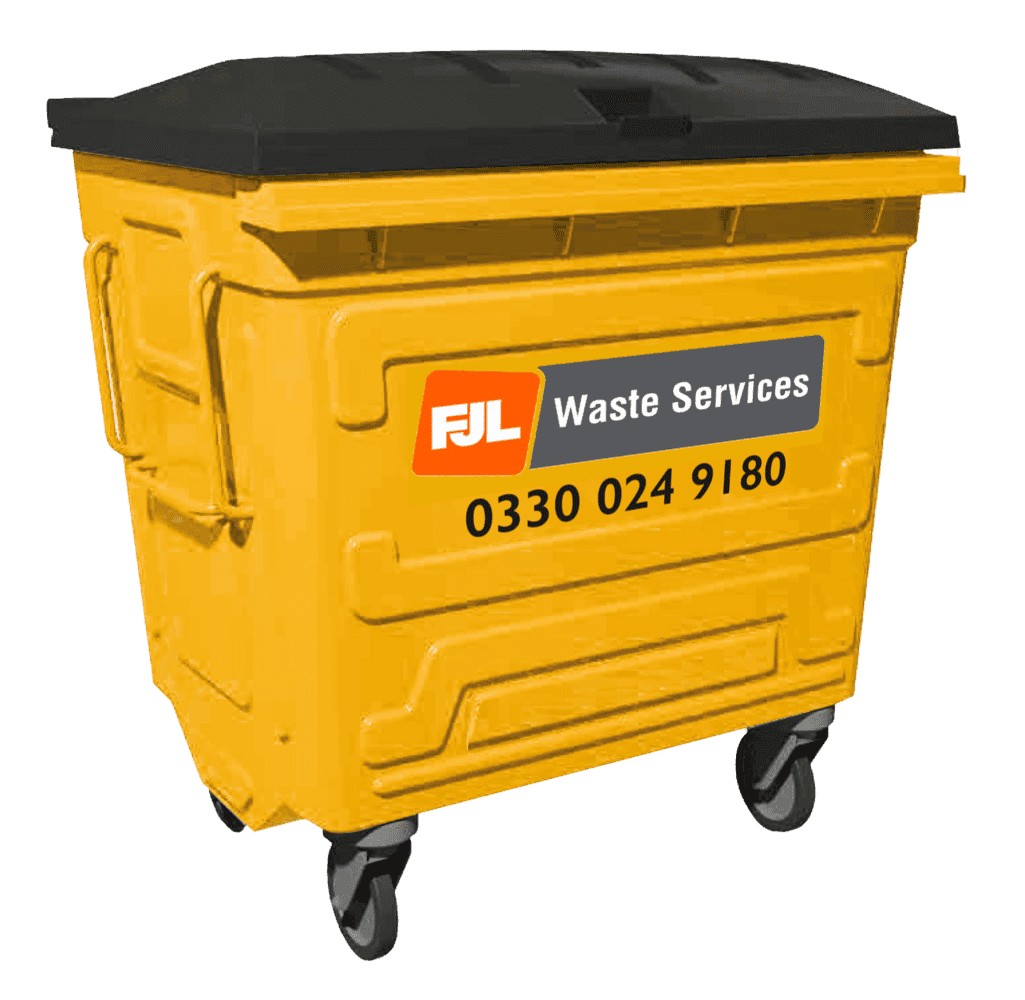
Commercial wheelie bins, from 240L up to 1100L, are built for ongoing waste from a fixed premises on a set schedule. Offices, shops, restaurants, warehouses, the day-in day-out general waste, recycling and food waste of a normal trading week. They live on site, get emptied on a round, and you pay per lift plus rental. If your waste is steady and predictable, bins are almost always the right tool. We break down the sizes in our guide to commercial wheelie bin sizes, and you can see the range on the commercial bins page.
Skips: one-off and project waste
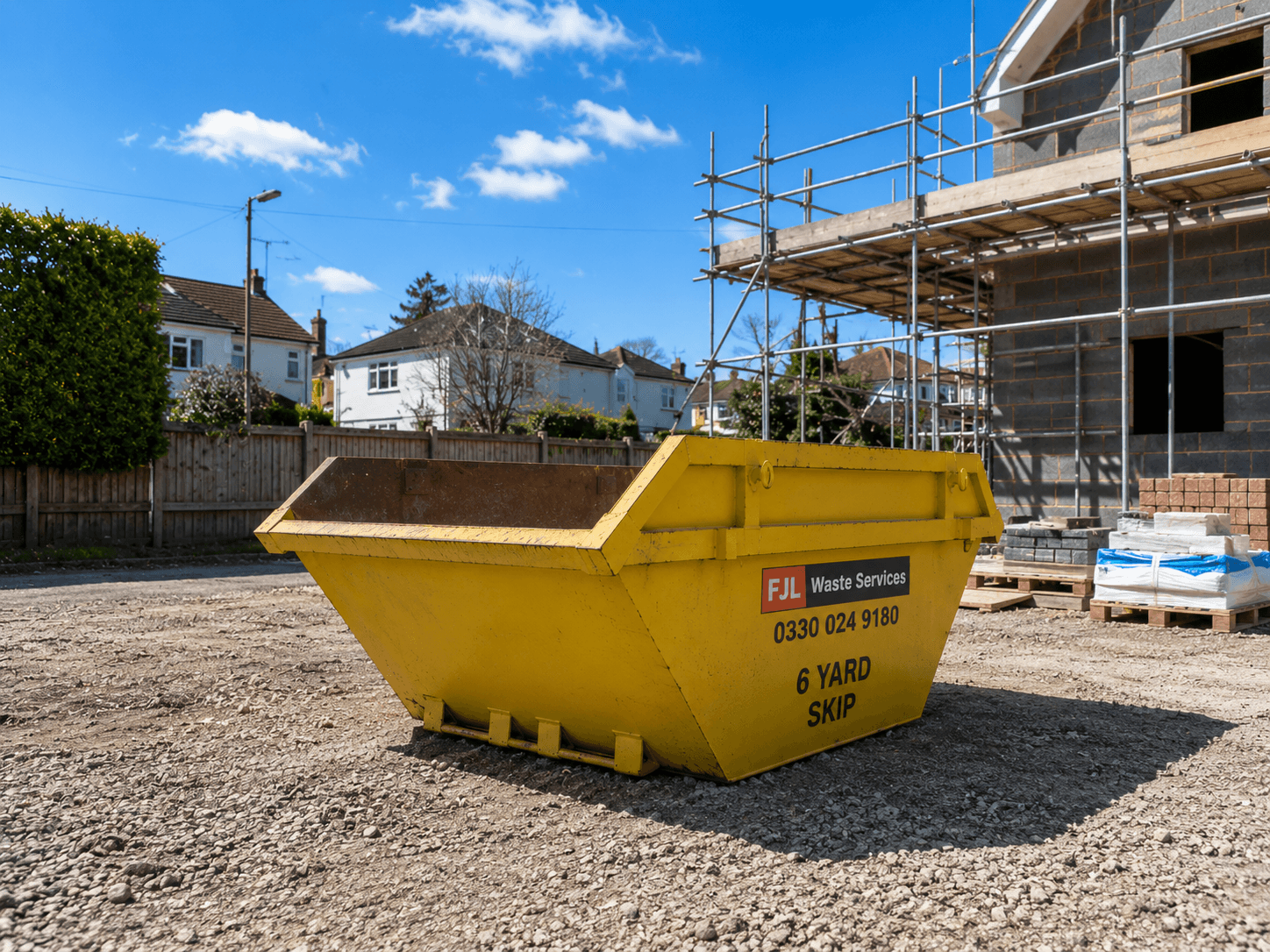
Skips are for bursts of waste rather than the weekly routine: a refit, a clear-out, a construction or landscaping job, a yard tidy. They are measured in cubic yards, typically 4 to 12, and you hire one for a period, fill it, and have it taken away. Open skips suit muck-away and mixed bulky waste; enclosed skips keep waste contained and tamper-proof on busy or public sites. If your waste is a project rather than a pattern, a skip is usually the answer. Our skip hire page covers sizes and how permits are handled.
Roll-on roll-off: large, sustained volumes
Roll-on roll-off containers, RoRo for short, are the big ones: 20 to 40 cubic yards, delivered and swapped on demand. They suit construction, demolition, fit-out and industrial sites producing sustained high volumes where a skip would fill in a day and bins would never keep up. You fill it, it is swapped for an empty, and the cycle continues for as long as the site needs it. For continuous high-volume waste, RoRo, or a compactor to squash volume and cut collections, is the efficient choice.
Pick by pattern
Regular and predictable points to wheelie bins. Bursty, bulky or project-based points to a skip. Continuous and high-volume points to roll-on roll-off or a compactor.
Quick comparison
- Wheelie bins: ongoing waste, fixed premises, set schedule, 240L to 1100L, pay per lift.
- Skips: one-off or project waste, hired for a period, 4 to 12 yards, open or enclosed.
- Roll-on roll-off: sustained high volume, swapped on demand, 20 to 40 yards.
- Compactor: very high volume from a fixed site, squashes waste to cut collection frequency.
Most sites use more than one
These are not mutually exclusive. A restaurant runs wheelie bins for daily waste and might take a skip for a refurbishment. A warehouse runs 1100L bins plus a RoRo when a big clear-out lands. The trick is matching each part of your waste to the right container instead of forcing everything into one. You can see every option, from caddies to compactors, on the bins and containers page, and if you are weighing up a switch of provider while you are at it, our business waste collection page is the place to start.
The bottom line
Choose by the shape of your waste. Steady weekly waste goes in wheelie bins. A one-off job goes in a skip. Big, continuous volume goes in roll-on roll-off or a compactor. Not sure which fits your site? Tell us what you are dealing with and we will recommend the right setup. Get a quote and we will size it with you.
Frequently asked questions
What is the difference between a skip and a roll-on roll-off?
Size and use. Skips are typically 4 to 12 cubic yards and hired for one-off or project waste. Roll-on roll-off containers are much larger, 20 to 40 yards, delivered and swapped on demand for sites producing sustained high volumes.
Should I use a skip or wheelie bins for my business?
Use wheelie bins for regular, predictable weekly waste from a fixed premises. Use a skip for one-off or project waste like a refit or clear-out. Many sites use both.
What size skip do I need?
It depends on the job. Smaller 4 to 6 yard skips suit modest clear-outs and heavy materials, while 8 to 12 yard skips suit bulkier mixed waste. Tell us the project and we will recommend the size.
When is a compactor worth it?
When a fixed site produces very high volumes of compressible waste. A compactor squashes waste on site so you pay for fewer collections, which can pay back quickly at supermarkets, factories and large retail.
Can I have both bins and a skip on the same site?
Yes. A common setup is wheelie bins for day-to-day waste plus a skip or roll-on roll-off for projects and clear-outs. We can supply and service the full mix.
Frazer Lanagan
Managing Director, FJL Waste Services
Frazer has 20 years in the waste and recycling industry, including time with large national operators, before starting FJL Waste 13 years ago.
More about Frazer Lanagan→